BROCCOLI

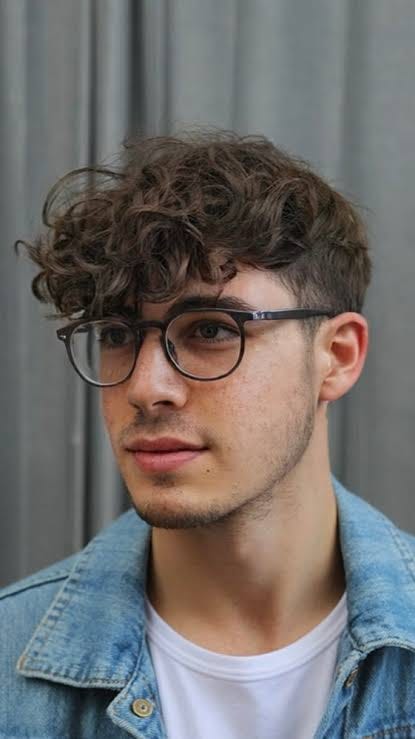
When I first came out and I was making my way as a performance poet on the gay scene, I often read my poem Why I Hate Broccoli. It was somewhat of a hit. I think it was about pleasure, or why pleasure is necessary and important, or something. I can’t remember.
Anyway. I thought of broccoli again when I started seeing a certain haircut. I pay attention to young men — and I happened to notice that there are a lot of teenage boys running around with exactly the same haircut: short on the sides, but fuzzy and curly on top.
So I googled it. Yes, the haircut is called ‘broccoli’ and it’s definitely a trend. Apparently this haircut is short on the sides because the young men are following good grooming — but on the top, they can let it grow free. I couldn’t help thinking of the political implications of this — and of ’Afros.’ As far as I can remember the political justification for an ‘Afro’ was just ‘I gotta be me.’ It struck me that the ‘broccoli movement on the part of today’s young men is motivated by what is perhaps not an opposite — but is surely a very different impulse.
Sorry, but to me the ‘broccoli haircut’ just seems so damned middle of the road, but most of all correct. So damned considerate, a case of following the rules, but not. And yes, it’s true; I’ve always had a fatal case of confessionalism, of ‘I must expressmyself-itis’ — I’m addicted to complete honesty. I detest even the slightest hypocrisy in speech, clothing or self-representation.
Of course one should be considerate of others. It’s like good citizenship or being kind to beggar women — it kinda goes without saying. But I can’t help thinking it’s kind of puritanical to think about it all the time. And what’s really puritanical is the danger of virtue signalling. Remember COVID? Remember everyone running around wearing masks and looking askance at others on Facebook if they didn’t do it too? It seemed all of a sudden the world was made up of good people and bad, those who cared and those did not, and this was a kind of orthodoxy, and of course nobody wanted to be preceived as a ‘bad person.’
Let me speak on behalf of ‘being bad.’ (Keep in mind I’m a very good boy who went very bad with no regrets so I speak from that particular personal prejudice!)
We all need to be ‘bad.’ Being bad in the protestant culture I was raised in meant obeying your impulses, searching out and finding pleasure, and having fun —which means sometimes doing naughty things that are not good for us or anyone else, simply because well, you gotta. It means not forgetting that we have bodies, and we are not necessarily creatures of reason, but have a strictly ‘Dionysian’ side.
The most fond and accurate memory of a definition of being ‘Dionysian’ was given me my best friend (an s/m dyke) many years ago. We were talking about ‘safe words’ and how important they were. Finally she got tired of the whole thing and just looked me right in the eye and said: “To be honest, sometimes it’s better without safe words.”
This was ‘the Dionysian’ looking at me right through my friend Sue’s eyes.
I’m a little afraid that we have become so intent on performing our considerateness of others that we are forgetting the Dionysian, and it’s not human or natural. When I was watching Christopher Nolan’s The Odyssy (there was a lot of broccoli attending that screening!) all I could think about was how good it will be for these young’uns to get this little taste of paganism. There is almost no Christian hypocrisy in this movie, Instead, like all pagan mythology, The Odyssey is all about living life in all its violence and passion — something that nobody seems to be doing these days, as we are too busy having pseudo-violent and fake passionate experiences online.
Oh,.
Please don’t pay any attention to anything you have read here. Wipe if from your mind. What I’ve written here could be construed as being somewhat dangerous.
I have noticed the same haircut on YouTube shorts featuring young men. Broccoli is an interesting choice of words! In my teen years it was the shaggy dog/rocker look.